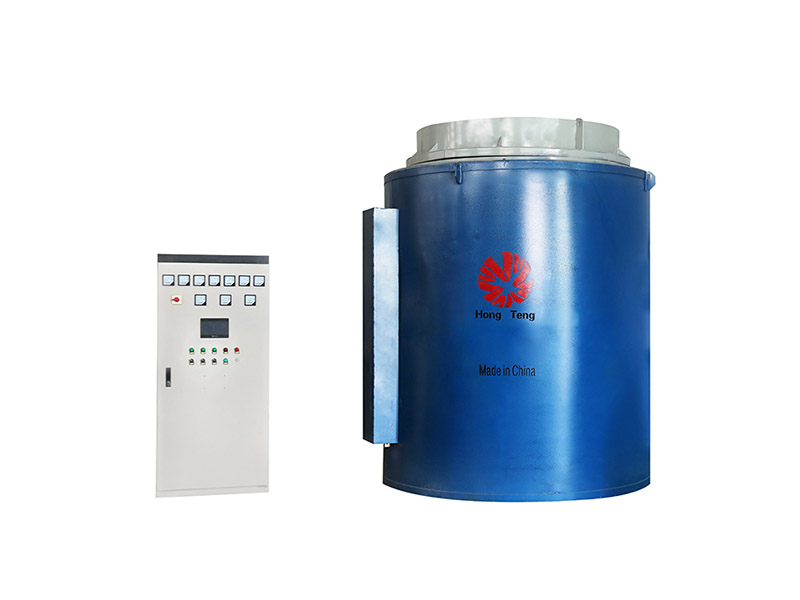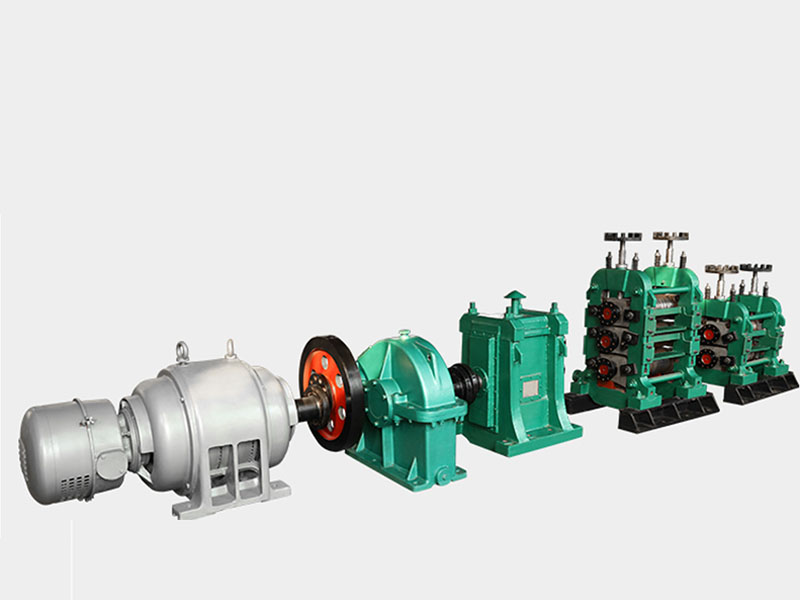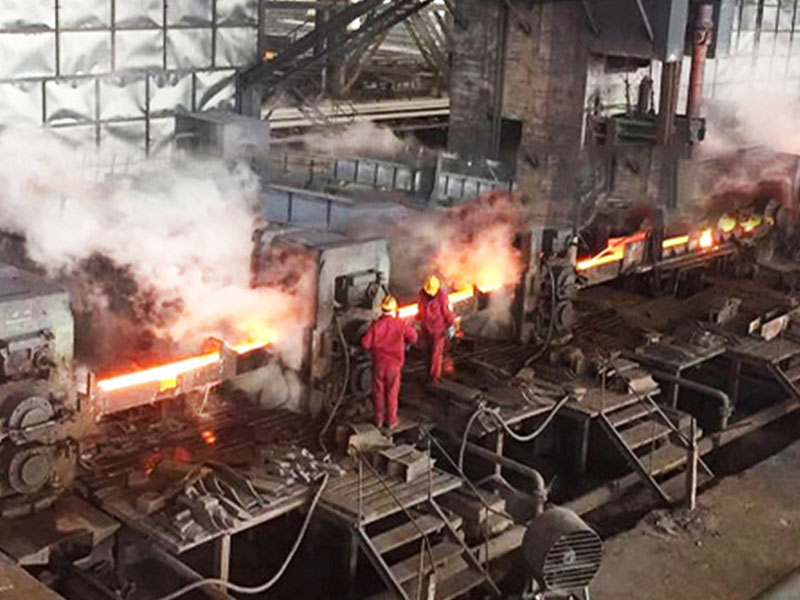
Aluminum casting equipment should be planned as a connected process, not a list of individual machines. The right line moves metal safely from melting through transfer, mould filling, cooling, handling and inspection at a rate that the downstream operation can absorb. Buyers get better results when they define the product, alloy, throughput and quality requirements before comparing equipment layouts.
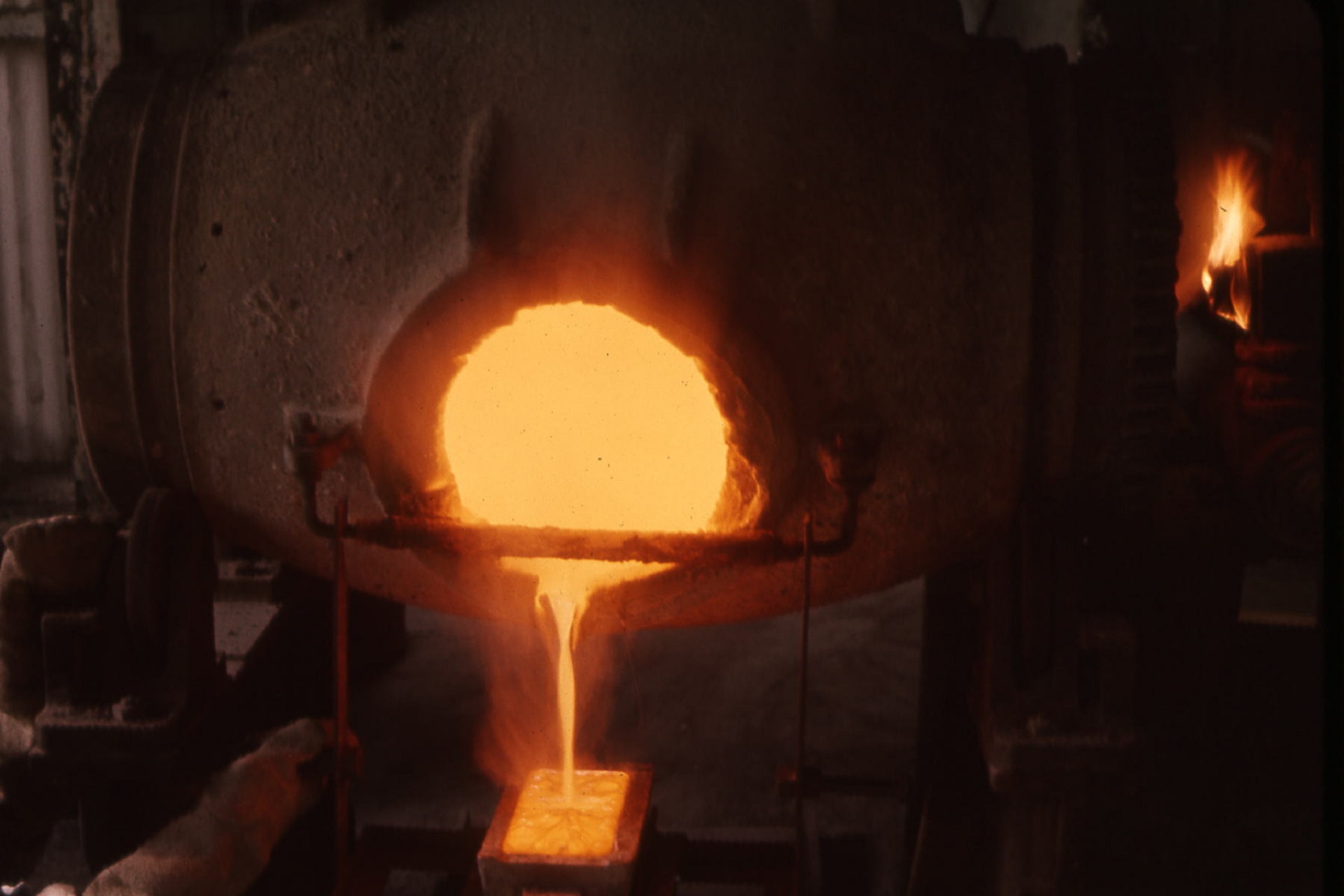
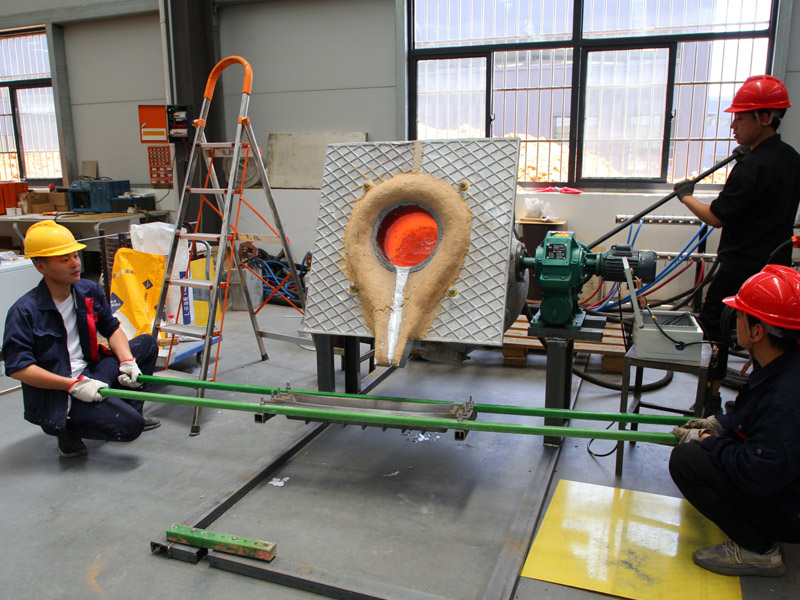
Image source: Jooinn, molten-metal-2, CC0 public-domain source.
Define the casting objective first
Start with the casting form: ingot, billet, rod, slab, or a shaped part. Then document alloy range, target tonnes per shift, permitted changeover time, dimensional expectations and the required condition of the delivered material. These inputs determine whether continuous, batch or semi-automatic equipment is appropriate.
Production capacity should reflect planned availability rather than an ideal peak rate. Allow for charging, dross handling, mould preparation, alloy changes, preventive maintenance and quality checks. This creates a realistic line balance instead of a system where one fast machine waits for every other step.
Map the melt-to-casting process
A typical arrangement includes melt preparation, temperature control, transfer, metal distribution, casting, cooling, discharge and inspection. The details change with the product, but each handoff deserves an owner and a measurable acceptance condition. Poorly designed handoffs often create turbulence, temperature loss or unsafe manual work.
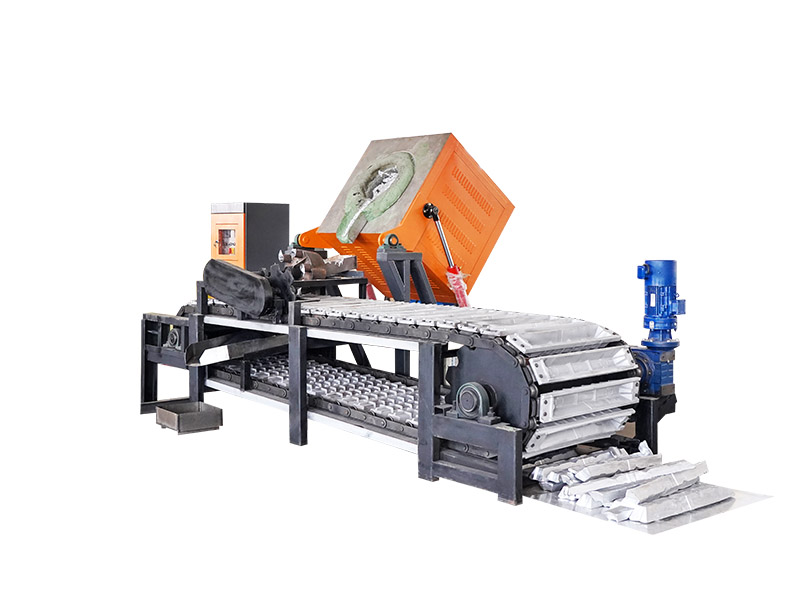
For projects using ingot or shaped casting, review the foundry casting production line together with the material flow and handling plan rather than evaluating the caster in isolation.
Select equipment around stable metal handling
Molten aluminum must reach the casting point at a controlled temperature and with appropriate cleanliness for the intended product. Specify how metal is transferred, how levels are controlled, and what provisions prevent unnecessary turbulence or long residence time. The equipment layout should leave safe access for cleaning, maintenance and observation.
- State product dimensions and tolerance requirements.
- Define target throughput and acceptable operating range.
- Identify alloy changes, return-metal use and traceability needs.
- List utilities, lifting limits, floor space and operator access constraints.
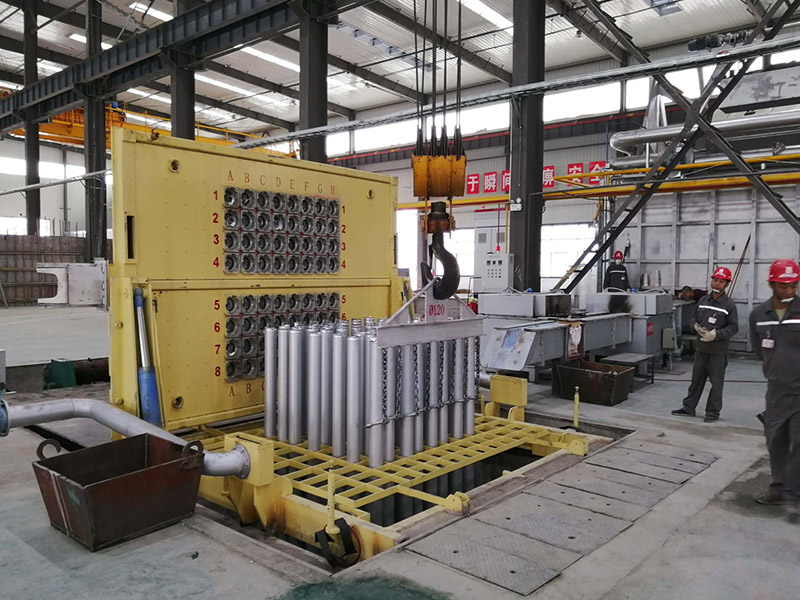
Where vertical or billet casting is needed, a deep well continuous casting solution should be evaluated against the required product size, cooling concept and site civil works.
Balance automation with maintainability
Automation can improve repeatability and reduce exposure to hot-metal tasks, but it must suit the plant’s maintenance capability. Specify which measurements are automatic, which alarms stop the process, and how operators can confirm the condition of sensors, drives and safety devices. A clear fault history is more valuable than an interface with unexplained messages.
Ask for access around pumps, valves, moulds, gearboxes and electrical panels. Design reviews should cover spare-parts strategy, commissioning support and time required to restore the line after planned service.
Connect quality checks to process control
Inspection should be placed where it can prevent waste, not simply detect it at the end. Record temperatures, casting speed, cooling observations, product weight or dimensions, and visible surface conditions against the relevant production record. When a deviation occurs, trace it back to a process setting rather than relying on a general judgement.
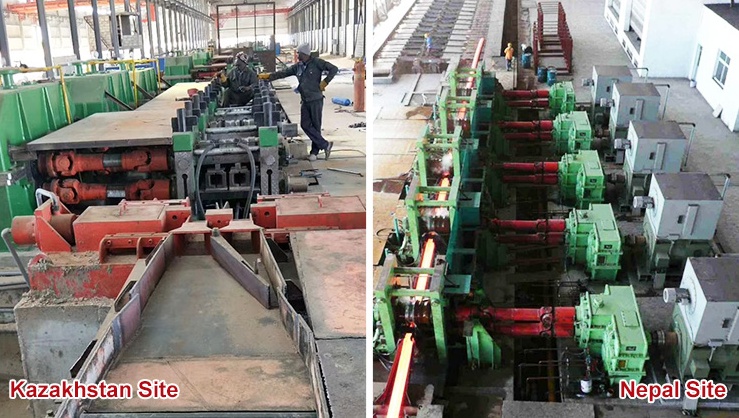
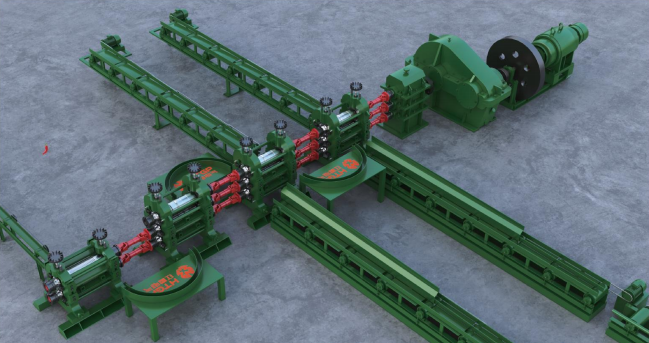
If output feeds a rolling operation, coordinate casting rate and product handling with the continuous rolling mill schedule. Line stability depends on both processes sharing realistic speed and buffer assumptions.
Prepare a supplier-ready requirement package
A concise requirement package helps suppliers propose comparable solutions. Include drawings or samples, expected annual volume, electrical and water data, environmental constraints, preferred automation level and acceptance criteria. Request that the proposal identify exclusions and assumptions instead of burying them in a total price.
For help turning production targets into a technical scope, contact our engineering services team. A well-defined scope protects safety, quality and long-term operating cost before equipment is ordered.
Questions to resolve before placing an order
What should a proposal make clear?
Each supplier should describe the process boundary from incoming charge or molten metal to discharged product, including who supplies utilities, foundations, cranes, guarding and control integration. This avoids comparing a complete line against a partial machine package. A layout drawing should identify maintenance clearance and operator positions, not only the equipment footprint.
How should acceptance be planned?
Agree on a commissioning plan that lists the product, alloy, operating range, observations and records used for acceptance. Confirm which staff will be trained, which manuals and electrical documents will be delivered, and which consumables or spare parts are needed for start-up. Acceptance should demonstrate a stable process at agreed conditions rather than a single short demonstration.
What makes the line adaptable?
Future alloy changes, new ingot sizes or a downstream expansion can affect the original layout. Identify likely changes early and leave practical connection points, control capacity and material-handling space where justified. That preparation can reduce disruption when production requirements evolve.
Utility planning deserves the same attention as machine selection. Confirm electrical capacity, cooling-water pressure and quality, compressed-air demand, drainage and extraction needs before finalising the layout. Identifying a shortfall during installation can delay commissioning and force compromises that affect process stability.
Involve operators and maintenance personnel during the review. Their practical questions about access, cleaning, changeover and fault response often reveal issues that a process diagram does not show. A line is more reliable when its daily users can understand, inspect and maintain it safely.
Before handover, test normal operation, planned stops and credible upset conditions with the responsible production team. Confirm that display values, alarms and written procedures use the same terms. This closes the gap between a supplier demonstration and a line that the plant can operate with confidence every day.