A vacuum furnace is selected for the result it must deliver, not only for its maximum temperature. Buyers need to connect the heat-treatment process with part geometry, load size, material, surface requirements, cooling method, and production schedule. This approach helps prevent a common mistake: choosing a chamber or pump arrangement that looks adequate on paper but cannot provide consistent results in daily operation. The following guide gives purchasing and engineering teams a structured way to prepare a vacuum-furnace specification and compare proposals with confidence.
Define the process before the equipment
Start with the treatment objective: hardening, tempering, annealing, brazing, sintering, stress relieving, or another controlled thermal cycle. Each process creates different needs for temperature range, pressure, atmosphere, cooling, and load handling. The specification should identify the material grade, part condition, required final properties, and any limits on distortion or surface change.
Include the intended process sequence rather than a single peak temperature. Heating rate, soak time, partial-pressure stages, quench settings, and cooldown all influence equipment choice. If the process is still being developed, define the operating window and identify which variables must be recorded for future qualification.
Size the chamber around the real workload
Chamber dimensions should reflect the loaded fixture, not only the part drawing. Account for baskets, racks, thermocouples, spacing for gas circulation, and safe door clearance. A tightly packed load may reduce heating and cooling uniformity even when it fits the nominal working zone.
- Record maximum part envelope and total loaded mass.
- State the usual batch size and batches per shift.
- Identify fixture material and expected heat absorption.
- Reserve space for temperature probes and process monitoring.
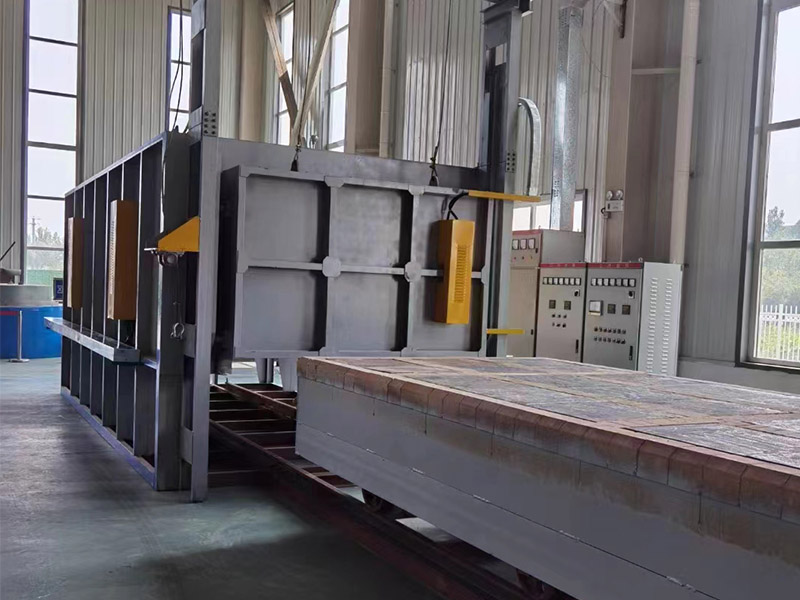
For plants using several technologies, compare the vacuum route with relevant bogie-type annealing furnace applications so the production plan assigns each job to the appropriate process.
Specify vacuum performance in practical terms
Vacuum level is important, but it is not the only measure of performance. Ask how quickly the empty chamber and the specified loaded chamber can reach the required pressure, how leaks are tested, and how the control system records pressure during the cycle. The appropriate vacuum range depends on the process and the materials involved.
Also review the pumping train, isolation valves, filtration, maintenance intervals, and recovery procedure after a power interruption. A proposal should explain which pump technology is included and how it supports the target process rather than relying on an isolated ultimate-vacuum claim.
Choose the hot zone and heating system carefully
The hot zone must suit the temperature, material compatibility, and cleanliness requirements. Graphite and metallic hot zones have different operating characteristics, and the best choice depends on the cycle and contamination risk. Request information about heating-element arrangement, insulation, temperature-uniformity method, and the location of control and load thermocouples.
Temperature control must be considered together with the workload. Uniformity is affected by load arrangement, fixture mass, sensor placement, and the cycle itself. Define the measurement method and documentation expected at acceptance, then agree how it will be repeated during service.
Match cooling to metallurgical needs
Gas quenching, oil quenching, and controlled cooling serve different materials and property targets. The correct option depends on alloy hardenability, part shape, distortion tolerance, and the required throughput. Ask for the cooling medium, pressure range, flow path, heat-exchanger capacity, and the assumptions behind each predicted cooling rate.
Where a separate quench operation is required, review the site’s quenching equipment options as part of the whole process flow. This avoids creating a bottleneck after the vacuum cycle.
Plan controls, utilities, and safe operation
A capable furnace needs controls that make the process repeatable and understandable. Define the required recipe management, alarms, data logging, remote support expectations, and user access levels. Confirm that the utilities—electrical supply, cooling water, compressed gas, ventilation, and floor loading—are available at the installation point.
Safety planning should cover hot surfaces, moving doors, stored gas, vacuum release, cooling-water loss, and emergency shutdown. The supplier’s scope should identify what interlocks are included and which site protections remain the buyer’s responsibility.
Use a clear proposal checklist
Compare suppliers against the same documented requirements: process window, chamber size, usable load, temperature range, vacuum stages, cooling configuration, instrumentation, utility demand, commissioning, training, spares, and service response. This makes technical differences visible before price becomes the deciding factor.
For help mapping a heat-treatment requirement to a complete equipment plan, review our engineering services or contact our technical team. Share the material, process, batch details, and target results to start a productive specification discussion.
Confirm acceptance testing and process support
Acceptance testing should reflect the process that will run in production. Agree the representative load, fixture arrangement, temperature cycle, pressure stages, cooling medium, and records to be supplied. An empty-chamber result is useful for equipment checks, but it does not replace evidence from a realistic loaded cycle.
During commissioning, verify alarms, data capture, recipe permissions, cooling-water protection, and the response to a controlled interruption. Keep the test records with the approved process documentation so production and maintenance teams have the same reference point when troubleshooting future variation.
Plan service around the operating schedule
Before purchase, ask for recommended inspections, pump-service intervals, hot-zone care, spare-part lead times, and remote-support arrangements. Assign responsibility for daily checks and scheduled maintenance. A vacuum furnace performs best when its process records and service records are reviewed together rather than treated as separate tasks.
Documenting this baseline also supports disciplined process reviews as materials, loads, or throughput requirements evolve.